Tuesday, November 28, 2023

Four Weeks

We left the US on Oct. 26 and today is November 27. It’s been 4 weeks. An eventful 4 weeks.  

It’s a long trip from door to door. You leave the US and it takes ~34 hours to get home. Rusty Oft, our board chair said, “it’s almost a week’s worth of a full time job just to get here!” And for us, having 2 kids makes it feel way longer than with 1 kid. We came back to a house with no well pump (it was stolen while we were gone), so we had no access to the water in our well. So we were back to bucket showers/flushes. Mold was everywhere: car, fridge, pantry, some of our clothes. Our car battery was dead. The battery charger at the hospital is dead. We borrowed a charger, couldn’t resuscitate the battery, so we had to buy a new one. We got a shipment of barrels from the US. It’s great to get stuff for the kids, but it’s a ton of work to unpack 6 suitcases only to immediately turn around and unpack 3x 50 gallon drums. James spent a couple of days and converted one drum to a composter. He’s also working on controlling his burnout, so they interviewed and hired a new assistant. Simeon is excellent, but it takes a lot of orientation to understand the complexity of the hospital.


About a week after we got back, two board members from Loma Linda came for an in person Board Meeting. James worked for days on his presentation and it’s always a flurry of activity to prepare for guests. The day after the meeting, they headed to Liberia for more board meetings at Cooper Hospital in Monrovia. On the way our hospital driver lost control and crashed our brand new (<4 months) donated Landcruiser into the ditch. One passenger broke both his legs. Another had a severe concussion. They are lucky to be alive. I barely saw James for 48 hours as he did damage control. He was doing medical consults in hotel rooms, filling out insurance forms, ‘translating’ what the orthopedic surgeons were talking about to church leadership at the Conference, Union, and Division.


To address our stolen well pump we have fundraised to extend our compound wall to enclose our well. We’ve had a lot of workmen walking through our compound during the construction. Suspiciously, twice in the last 10 days our compound has been broken into in the middle of the night and two 50 gallon drums have been stolen. Twelve foot walls, razor wire and a security guard feels like overkill until someone still manages to steal from us without anyone noticing until >12 hours later.


Yesterday, Sierra Leone went on “shelter at home” orders because a group had attacked the armory at the military barracks. The prison was breached and many inmates set free. We were safe during all of this and were too far away to hear the gun shots. Flights were cancelled for the day and many of our friends spent the whole day hearing gun fire and making escape plans while keeping their go-bag nearby. The streets are quiet today and there is now a nightly curfew in effect. 

It has been a lot. And all of this on top of adjusting to being parents of two, a 3 month old that is struggling to handle the heat and constant noise, taking bucket showers, dealing with never-ending diarrhea in our newly potty trained newly-back-in-African-daycare toddler.

It also all happened in the midst of taking a volunteer to the beautiful, peaceful beach nearby, Thanksgiving with our dear friends here, and play dates with other families with children.


And this is just what has affected our life. The hospital continually churns with crazy cases and sick patients. We called the health department for a case that met the criteria to screen for Ebloa. They said “Great, draw some samples and we’ll be by in a few days to pick up the sample.” While we were back in the States one of our hospital staff lost his 2 year old when she became suddenly severely ill in our hospital. Another staff became involved in Black Magic saying she was cursed by a witch. She has pictures of the witch doctor treating her. Due to this she is separated from her husband and no longer has a job or way to pay her children’s school fees. We gave our laundry lady a loan to buy a phone which was then promptly stolen from a charging station she took it to. Whenever we get back to Sierra Leone there are so many people just waiting for us to come back to ask for help.


Sometimes it feels like we are under attack here - everything builds on itself: no water in the house, the constant begging from strangers, thieves in our compound, scary car accidents, violence in the streets, witchcraft, children dying. It feels heavy. It feels dark. 

But we take comfort in this: The dark is not dark to God. God is hope. God is light, and we are not alone. 

Psalm 139: 12: Even the darkness is not dark to you; the night is bright as the day, for darkness is as light with you.



Tuesday, March 1, 2022

Inferiority Complex

There’s a community of missionaries in Waterloo that are a Godsend for us. They have been here years longer than we have, they have practice raising children in Sierra Leone, and they are great people who will be lifelong friends.


Occasionally people will talk about raising children in Africa as compared to kids in the US. One topic I find particularly interesting is the speculation on how our children will view race. In America there is lots of discussion about race, racism, and injustice. As is unfortunately more common recently, the ideas and discussion around these topics is muddied by politics.  But I’ve heard some American parents in Sierra Leone talk about how our children won’t see racism the same as if they were raised in the US. And I think that’s true, but a recent experience makes me realize how much more insidious racism can be. But first, a little backstory.


I have been working with the nurses to improve the quality of our care for 2 years (but it seems like decades). It’s a give and take dialogue where I give feedback about their work and they give constructive criticism to me about how the providers are doing. One of the routine complaints that I get is that patients are discharged too early. I initially got this feedback in 2020 and I promptly changed my spiel to patients when discharging to something like this:

“You’ve only been taking oral medicines and every day you’re improving. You can take the same medications at home, receive the same treatment, and not have to pay our hospital bed fees. What matters to me is that you get the right treatment, not where you are. If you want to stay here and pay the nightly fees, fine. If you want to go home and continue exactly the same medicines, fine. It’s your choice.”


Since, 2020 every single patient I’ve discharged it has been their choice to go home. So I was quite surprised when at this month’s meeting the nurses again complained that I was discharging people too early. I told them my modified discharge speech and they replied,


Africans have an inferiority complex and sometimes they don’t speak their mind and just do what the doctor says.


That phrase, ‘inferiority complex’ has been stuck in my mind for weeks. How is it that regardless of socioeconomic status or regional differences, the Africans still feel ‘inferior’ to me. What is it that makes me ‘superior?’

It’s not my education. Our surgeon and medical director, Dr. Kabba has had years more training than me. He’s both a physically large man and the leader of this institution, but I’m a skinny white dude who has to ask permission to sign any official documents.


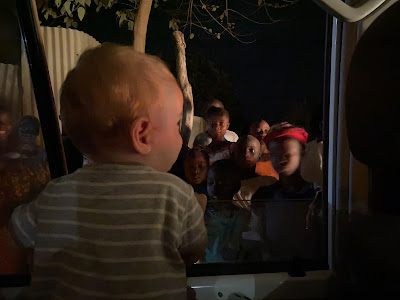
The only other thing that comes to mind is the color of my skin. Foreigners who come to SL are frequently well educated and quite wealthy and anyone with white skin is often treated like royalty. Patients sometimes trust my medical opinion on surgery more than they trust Kabba’s, even though he’s the surgeon. My theological conclusions in church or morning worship are never debated, just accepted. I can just walk down the street and complete strangers will say ‘Thank you’ as I pass. As we walk through the market with Liam, people shout marriage proposals to him, even though he’s only 11 months old. Children line up to touch his pale skin. The admiration of Liam is so constant that sometimes it almost feels to me like worship.


As any parent proclaims, I’m sure my son will grow up to be smart. But how will it affect him to have the local children always assume he is the smartest? How will it shape his development where every black person around him will treat him as someone superior due to Liam’s economic status? Already the staff refer to him as ‘Dr. Fernando’ or ‘my boss.’ Will he have a distorted self-worth since he will always be the center of attention as one of the very few white children?


Sure, racism feels different in Sierra Leone than in America. But here, I sense a certain level of ‘internalized racism’ where the people inherently believe that white people are superior. Liam will spend his childhood treated as the wonderful ‘apoto’ boy who is somehow different from the local kids. Just because my son will grow up as a minority, doesn’t mean that there isn’t opportunity for racism to sneak in.


Tuesday, February 15, 2022

Houseguest

 I had another moment where I thought, “Wow, Africa has changed me.”

There is a 3000L tank on a cement tower that supplies the water to our house. The tank is clear, so that you can see when the water is running low. The local government quit supplying our community water less than a year after our arrival in 2019. (Something about fixing a dam. The first people messed it up. The second crew hired worsened it.) So for a long time we were buying water from a big truck that would come and fill all our tanks for about $150. Early in 2021 John Campbell, another missionary near us, installed a pump into our hand dug well behind our house. It’s great! You run the generator and then the water goes into the tank. But now that we’re using the well, there seems to be an increase in algae growing in our tanks. This algae occasionally will come into the plumbing inside the house and clog our pipes that are cemented into our walls. This requires us to break the cement, find the pipe, change the section affected. Not fun. So we installed a mesh filter between our tank and the house. Intermittently the mesh will be overgrown with algae again and our water pressure is terrible. One shower doesn’t work, the other is a dribble. We run the shower for 30 minutes to fill one bucket to shower out of. Toilets take forever to fill.

Jump to last week. One of our dearest friends, an American Missionary woman who will remain un-named because I haven’t asked her permission to tell this story, is visiting for dinner. We tell her about our water troubles and she completely understands. She’s lived here a long time and is married to a Sierra Leonian. It got late and before taking the long bumpy drive home, she excuses herself to the bathroom. It was a lovely evening. As I get ready for bed, I use the toilet and see there’s still urine in the bowl. I am not in the least distressed (because water conservation is normal) and I’m actually quite pleasantly surprised. Now the toilet won’t be filling for 30 minutes making our bedtime routine impossible. She was such a considerate houseguest to not flush the toilet!


Here's a picture of me trying to clean out the algae from around a submersible pump in our tank. I'm not sure why Rachel is missing a shoe.


Thursday, October 21, 2021

Culture Change

Talking about ‘changing a culture’ is quite prevalent. Topics range from institutional culture, the effects of Hollywood, anti-vaccine movements, or even how welcoming churches are to visitors. But until recently, I’ve never really understood how difficult that can be.


Early in my time in SL, the massive stigmatization around HIV seemed silly to me. HIV is treatable, the drugs are free, and it’s extremely difficult to transmit just with casual acquaintances or even housemates. If you take the drugs regularly, you can live a normal life. What’s the big deal with the stigma? Why are people so afraid? But the longer I’ve been here, the more I understand.


I’ve heard stories of a wife finding out she is positive, then her and her children are driven away from the husband’s home. Neither her own family nor the husband’s family were willing to house or support her. People lose jobs, churches, and livelihoods. With the prevalence of the disease as high as 2%, almost everyone is acquainted with someone who’s positive. But due to the extremely high risk of ostracization if the diagnosis is public, people keep secrets and so the perceived prevalence of HIV is much lower than what is actual. Which makes it all the more stigmatizing because it seems like a rare disease.


With all of the social pressures, I’ve really started to behave like a Sierra Leonian. Even if the patient is unconscious and on death’s door, I never tell the family about the HIV diagnosis. I will frequently write a vague diagnosis on the death certificate if the family doesn’t know the HIV diagnosis. Those secrets are just too volatile to be rash with.  If I have a patient who tests positive, I always bring them into my office to have a one-on-one discussion. But if I suspect a language barrier, I’ll bring along a nurse to translate. And that’s exactly what I did last week. I had a patient who tested positive, spoke a tribal language, and was quite obstinate and wanted to go home. I didn’t have high hopes for the encounter because often people say “I don’t believe your tests. I don’t have it.” And then they just leave the hospital and my guess was that she would be one of those types. But then something happened that surprised me.


The patient and the nurse were bantering in a local tribal language, Temne. It was quite clear that what I had said wasn’t the only thing being told to the patient. But I’ve had this nurse translate many times in the past and I trust her to be faithful to the concepts of my message to the patient. After the dialogue slowed down, I turned to her and asked what she told the patient. “I told her that I have HIV and you can live a normal life if you take the medicines.”


I just sat there aghast. I suspect my mouth was hanging open. Previously, I had no idea this nurse was HIV positive. And not only is she positive, but she just told a complete stranger!

I stared blankly ahead as my brain tried to catch up. Why would she tell this patient her secret? This patient seemed like the type of person who will walk around and blabber mouth what she found out about the nurse.


Words start to form in my mouth, “I had no idea.” But thankfully, my brain edited those words before they came out. Next idea came, “You shouldn’t have told her!” but those were repressed too. Eventually, after painful seconds, I said “Ok, let’s warn her that when she starts the treatment, she’ll initially feel nauseous. But I can give some medicine to reduce the side effects.”


As the interview progressed, the entire demeanor changed. The patient started making eye contact. Her body language opened up. She started engaging and asking questions rather than just giving the flat denials of before. With the addition of trust, the patient seemed like a new person to me.


I just couldn’t get this encounter out of my head. I constantly rage against the stigmatization of HIV, but when there’s a chance to make change my gut reaction is fear for my staff whom I care about. It’s like I want things to change, but I hate to see my staff risk themselves. The hypocrisy (maybe cognitive dissonance?) of that really has been eye opening for me. It’s a beautiful reminder of what true healing looks like as well as an example of how far I need to grow still. I may have more education than some people, but that doesn’t mean that I’m qualified or capable to provide healing. The healing this patient needed was trust. Something I might not have been willing to give.


A positive change in the culture is impossible with an attitude of fear like I had. But I thank God that he puts his people in the right place at the right time to bring healing to His children. It was truly humbling and inspiring to see that in action through that nurse. I pray that God will send His Spirit on all of us, that we can be like that nurse and have the courage and trust to do what’s right.


Addendum:

In residency, while studying how powerful placebo medicines are, I thought it would be great to be able to just give patients placebo tabs. It’s a harmless intervention that absolutely helps. Today, I just realized somebody gave me placebo.


I showed my essay above to the nurse in question. I wanted to get her permission before posting something so personal. She responded, “I don’t actually have HIV. I just saw that she needed trust and confidence, so I lied and told her I did have HIV. We might have saved a life that day.”


What‽ I totally believed she had HIV. But just like I sometimes want to give patients sugar pills, apparently this nurse saw that this patient needed ‘sugar trust.’ It never even crossed my mind that faking vulnerability to gain trust would be so therapeutic. But wow, lying to a patient about my own condition certainly feels a lot different than prescribing sugar pills as placebo. I’ve got a lot to think about these days.


Monday, September 13, 2021

Openness

 Sometimes it takes people asking me questions in order for me to be able to articulate the things that I’ve learned.

Currently we have a medical student volunteer from Germany visiting the hospital. She brought along almost €300 donated to her by her family and friends to help the people of Sierra Leone. Even in just two days of working at the hospital she already can clearly see the desperate need of people. This morning she brought me the money and said “I want to give this to you so that you can help the patients who really need it.” And that prompted me to reflect on the last several months of personal growth in new ways.

I’m finding that living in Sierra Leone is challenging a lot of my cultural habits. When living in the states, I was always reticent to give to the beggars you see by the side of the road. My rationale being that I want to make sure my money goes to the people who need it most. And roadside assistance can be hit or miss with true and actual need. As I bring these habits into Africa, I find myself only wanting to help the poorest of the poor. If I think the family can scrape together enough money, call enough relatives, or sell enough of their assets, they are somehow less deserving of my help. And the more I have stopped to analyze this behavior, the more it seems like I am somehow assigning value or “worth“ to different people. This is exactly the conundrum that our volunteer came to me with this morning. She wants her money to go to where it’s “really needed.”

But today is an unusual day. A week ago we had a patient come to the hospital who couldn’t pay a single cent. He’s a 15-year-old man who for the last six months has had a massive dental abscess. The pus has drained from his face down into his neck and in multiple places he has open wounds that continually drain pus. He’s been on several courses of antibiotics and still his disfigurement remains. Our new dentist in Sierra Leone, Mel Bersaba, saw this boy and rightfully felt pity for him. So he single-handedly pulled as many strings as he could and we were able to get this man to see the top dentist and dental surgeon in the country. He got a CT scan of his face that showed the infection has been eating away at his jaw bone. The specialist recommended surgery as soon as possible. Dr. Bersaba spent hundreds of dollars to get all of this done. But today when it came time for the driver to take the patient to the hospital for a coronavirus test prior to surgery on Thursday, the patient refused to get into the car. I looked him straight in the eye and told him that if he did not have the surgery, which will cost him absolutely nothing, he would be dead in less than a year. After a long discussion I got to the root of the problem: he says both him and his mother had the same dream. During surgery at the hospital he will die.

I begged, pleaded, and explained to him why I was afraid for him. I told him that I believe these dreams are from the devil and the devil is just trying to kill him. If he does not have the surgery, he will die. I told him that I don’t fear surgery, coronavirus, or humans. But I do fear that demons are trying to harm him. I told him the only way to overcome those dark forces is with God, prayer, and courage. He declined my offer to pray for him because he’s Muslim. Just a few hours ago he left and went back to the village.

What am I to think about this? Did we spend hundreds of dollars, waste the time of top specialists in the country, and dedicate our days to a cause that wasn’t worthy? I think a year ago I would’ve thought so. This country has started to change me. If I am truly to emulate Christ, I don’t just dedicate myself to those I deem “worthy“. How often does God “waste“ his love, time, and blessings on me or other sinners like me? The idea of worth is not how Christ sees the world. And I am slowly starting to reframe my ideas around success.

I think there is value in living a life open and generous enough that some of your projects “fail“ by human standards. In the past I have been far too stingy for fear of failure. When I think about God’s continual commitment to an earth filled with failing human beings, I think that’s the kind of love I’m expected to emulate.

If an institution took this approach all the time, it would be exploited to bankruptcy. But I encouraged my volunteer to keep the money she has and continue to observe and learn for a few more days before deciding how to use it. Deciding how to use a limited amount of money is very Sierra Leonean. Do I feed the healthy children that I have, or do I spend money on the child who is sick? Feeling that tension will help her to understand the culture. But I also encouraged her to challenge the idea of that some people are more worthy than others. It’s a very American idea that I have grown up with and has only started to slowly change in the last several months. It’s hard to live an open life where your time in money ends up in “failure,” but it’s something I aspire to do. And daily I try to remind myself that the work we do might not bear fruit in this lifetime, and that’s not my problem. I’m called to live an open and generous life that runs quite counter to my American culture.


Friday, July 23, 2021

Furlough 2021


Wow, it’s been a long time and so much has happened in the past few months. To catch up, let’s go back to March 2021. Buckle up, this is a long one.


Rachel’s very pregnant and it doesn’t seem to faze her at all. She’s working full days in the hospital, cooking and cleaning like there’s been no change. A pregnant woman is always an exciting thing in Sierra Leone. Both pregnancy and infanthood are so tenuous that people tend to celebrate every little thing. There’s a nurse at the hospital who’s due date is just a month earlier than Rachel’s. They take maternity pictures together and it’s a very exciting time.


Rachel is scheduled to go back to the US about 5 weeks before her due date and thankfully travels without incident. The most memorable ‘amenity’ of being pregnant happens in the Lungi airport. The staff see she’s pregnant and decide that they need to help her move her carry on everywhere. So when she has to go to the bathroom, they follow her in , escort her to a stall, and get to listen to every detail. Privacy clearly means something different in Africa. Thankfully the rest of the trip is uneventful.


After her departure I’m left alone for about 3-4 weeks with plans to return to the US about 2 weeks before the due date. She left food for me in the freezer, a list of things to pack and do before leaving, as well as sticky notes around the house with cute little notes. Some of them seem like she can see the future. Sometimes when I’m hungry and too lazy to cook (or even reheat), I’ll just eat peanut butter off of a spoon. When I get to the peanut butter in the pantry I pick it up and there’s a note: “This had better not be your whole meal.” BUSTED in absentia!


Later in the week the nurse with a similar due date goes into labor. A nurse is called to perform the delivery and things don’t go well. The baby is tachypneic (breathing too fast) and hypoxic (low oxygen). They call Dr. Kabba and he arrives as quickly as possible, but not before some unnecessary procedures were done. He stabilizes the child who is then reunited with the mother. A few hours later the condition worsens again and Dr. Kabba is called to return. He works on the baby for several hours, even needing to provide positive pressure with a bag valve mask (forcing air into the lungs because the baby is too weak to breath). After several hours he calls me in for backup and we continue to work throughout the night. The condition doesn’t improve and by morning we teach the family to provide the breaths and we go home to rest for an hour or two. After a quick catnap, I return to the hospital to find the baby in worse condition and it’s time to make a difficult decision. Do we keep the baby here where we have good staff but inadequate pediatric supplies or do we send the baby to the government hospital where there are more resources but occasionally they are inadequately staffed? We decide to send the baby to the bigger hospital. At this point my apple watch tells me I’ve stood at least one minute out of every hour for the last 23 of 24 hours. I’m exhausted and the day has just begun and patients are arriving to be seen.


I check back throughout the day with both the mother and the baby. The baby’s condition slowly worsens and she dies within 24 hours of transfer. The tradition in Sierra Leone is that you don’t tell the mother about the baby’s death until she has ‘recovered’ from labor. So I’m forced to smile and nod when she tells me, “they tell me the baby is getting better at the other hospital.” The next night I get a call around 11pm and the mother needs help with her breast pump, as she’s excitedly pumping milk for her deceased child. I decide it’s better to not tell Rachel all the details and I give her a vague idea of what’s going on before I go to sleep.


At 5AM I wake up to see lots of missed calls from Rachel and the phone currently ringing. I pick up and she tells me her water has broken. It’s only been 10 days since she arrived in the US and a month before the baby is due. I’m not supposed to travel for another 2 weeks! I immediately start to work: buying plane tickets, packing to travel, preparing the house (absolutely everything needs to be put into totes), paying all the bills we owe, preparing for ways to pay our security and house keeper while we’re gone, and the most difficult – get a COVID test. At 7AM I call Emily and Peter Sheriff who know someone at the lab. They pull all the strings, pay all the ‘tips,’ I get swabbed, and after a few hours I’m sitting at the airport without a COVID result. I don’t have any money for transportation or a hotel. I’ve banked everything on this test coming through. And thankfully it does.


I get to check in and the agent says, “there’s something wrong with your ticket, they’re waiting for you in the office upstairs.” I go to the office and the problem is that I have two layovers in the EU. After the US banned EU citizens from entering due to COVID, similar restrictions were placed on US citizens. Individual airlines and cities negotiated exemptions, but my ticket violated that. I told the agent my story and he looked at me and said, “you’re a desperate man aren’t you?”


With the changes, I wasn’t able to fly directly to Bismarck without an 18 hour layover. So we orchestrated a plan where my mother would meet me in Atlanta airport and join me on a flight to Minneapolis. My long time friend, Chris Block, would drive from Bismarck and pick us up in Minneapolis. Mom would drive through the night and Chris would sleep as he had to work at 7AM the next morning. By the time I arrive in the hospital, it’s been 52 hours since Rachel called.


I get to the locked maternity unit and my sleep deprived brain says into the speaker, “This is the late husband of Rachel Fernando.” Only the next morning did I realize it sounded like I was dead and not just late for the birth. Rachel sleepily greets me and we had a brief conversation before heading to the Neonatal ICU.


Liam was born more than 24 hours prior to my arrival and was tachypneic and hypoxic, so he was admitted to the NICU. Sound familiar? It quickly dawned on me that my son had exactly the same symptoms as the baby I had just worked on for days. But Liam had the luck to be born in the US.


The culture shock was like nothing I had ever experienced. As I sat in the NICU, I had absolutely no concerns for Liam. He was in the best hands and improving with ‘simple’ things I was unable to provide to another new born just days earlier. The relief of arriving and the joy of a first born child mixed with the fatigue of travel and grief of losing a different baby just unlucky to be born in different circumstances. I couldn’t help but think that my son lives simply because of our wealth while our friend’s baby is born with identical symptoms and dies. The culmination of those few days left in me a strong understanding of the cruelty of this unjust world. All we truly have to cling to, regardless of our place of birth, is the hope of the second coming and resurrection. What good news it is, but how easily we forget until we are jerked to our senses.


Liam recovered quickly and was discharged without incident a week later. We spent some time in North Dakota with Rachel’s parents, then went to Tennessee to spend time with my family. After our arrival in TN, Rachel began to have severe abdominal pain. We did some investigations and found out her IUD had perforated her uterus and was loose in her abdomen requiring surgery. Coordinating all of the imaging and surgical preparation when your primary doctor is in ND and the patient is in TN is quite difficult. Finding someone to perform the surgery took another several days of struggle. Eventually the surgery was scheduled, but it became clear that we would have to delay our return to Sierra Leone.


The surgery went off without a hitch and Rachel recovered quickly. But soon another deadline approached. The day after we received Liam’s passport, we mailed our passports to the Sierra Leonian Embassy in DC for visas. Things went smoothly with the embassy but the US Postal service lost our passports in the mail. The tracking showed that they bounced between DC and North Carolina for 2.5 weeks, then went to Atlanta for a few days. We called every number we could find, but nobody could assist us. It came down to Friday when we were scheduled to fly on Monday. Should we get a mandatory travel COVID test on Friday even though we don’t have passports? The mail runs on Sabbath but not Sunday, and our flight leaves at 7AM on Monday. We decided to step out in faith. Sure enough, the passports arrived on the last possible day.


We arrived in Sierra Leone two days ago still shell shocked by the last few months. It’s wonderful to be back and every old challenge seems new and different now that we have Liam. COVID is still a huge challenge for Sierra Leone and the 3rd wave has been much more lethal than previous waves. Looking back, it’s easy to see God blessing through difficult circumstances and we believe he will continue those blessings now that our family is just a little bigger.


Thanks for reading and thanks for all your prayers and support.


Thursday, November 5, 2020

Some not too sad stories

There are things in Sierra Leone that are starting to seem normal, but when we say them out loud it sounds ridiculous. I want to compile a few of those stories here.


The first is a story from Rachel. During COVID all of the outpatient services were constrained to one room in one building: Registration, Payment, Consultation, Minor Procedures and dressing changes, etc. There’s basically no privacy as every section is just separated by fabric curtains. A patient came in with a large laceration on her leg from falling in the market onto some exposed rebar. It became infected and she had to come back daily for dressing changes and wound care. Sometimes she would be screaming so loud with the dressing changes that we’d have to shout to hear our clinic patients. But nobody seemed to mind.

We use honey dressings for their antibacterial properties and this woman really needed it. They keep the honey in a plastic water bottle, but this bottle was running low. Since everyone pitches in, a lady from accounts grabbed the 20L container that we store the extra honey in. She used a scoop to fill up the small water bottle and handed it to the nurse. I watched as the nurse applied the honey to the patient’s wound. But when I looked to my left, there was the lady from accounts, standing right next to the patient, licking the honey from the scoop! (Why waste honey??) Can you imagine being a patient and watching someone eat the very thing a nurse is putting directly into your wound?!


Another instance is regarding our night security, Pa Brima. This guy works very hard. He has both day and night jobs most of the time. When he comes for his shift at our house, he usually changes clothes into something more comfortable for the evening that he doesn’t mind if they get dirty. One night we have other Americans coming over for dinner. As is usual, we decided a time for them to arrive. When Brima came for the evening, I warned him that they were coming at 7 PM. The appointed time comes and I hear a honk at the gate. I go outside and I see Brima opening the gate for the car. His shirt is half pulled on and wadded up around his nipples; thankfully his undershirt was properly positioned. He doesn’t have any pants and is wearing only boxers. Everyone gets out of the car and happily greet him because they know him from another job. Then we all go into the house. Nobody mentions it. It’s somehow normal for our security to be half dressed.


Lastly, a story from a patient in the ward. On one of our mobile clinics, John Max Conteh (one of the midlevel providers, a CHO), saw a child who was 7 months old and weighed less than 3 kg (6.5 lbs). This is the most malnourished child I’ve ever seen. This child’s name is Neneh (a girl’s name) even though he is a boy. The mother had so many baby boys die, that when she saw this one was a boy she gave it a girl’s name in hopes that whatever killed the others wouldn’t effect this baby. I sat next to the woman and baby on the bed and facing us was the husband sitting on another bed. I was asking them questions about their living situation, their other children, this child’s birth, etc. I asked if the mother was breast feeding and she was. I asked if she was making much milk and instead of answering the question, she just pulled her breast out of her shirt and squeezed it. Breast milk came out more like water than milk because of her malnutrition. But when she squeezed it flew out and sprayed all over her husband who was sitting directly across from us! I was the only one who was surprised by this, everyone else carried on the conversation as normal. “See, she’s making milk.” 


Anywhere you live, life can be sad and life can be strange. But the longer you hang around, the more normal things seem. I think this is how cultural blind spots are formed. But for now, I still relish the cartoonish absurdity of daily life.


Tuesday, October 20, 2020

What Kind of Week Has it Been


It’s only Tuesday but this week has already hit me hard with the reminder of how stupid Africa is. It’s stupid that by sheer chance you can be born into a country where death is so common, poverty is rampant, hunger is fierce, and illness is beyond healing. It breaks my heart. And if by sheer chance I was born in Africa it would break me. But these Africans are strong in so many ways. 


Here’s this week’s happenings so far:

A 40 year old man who is quickly on his way to death’s door due to multiple infections ravaging his body. Infections that could be easy to treat if it weren’t for his positive HIV status. HIV is treatable. And in this country the treatment is free. But the stigma behind HIV is so strong that even after meeting with the HIV counselor he denied it to my face that he had HIV. He told me the counselor tested him and it came back negative. I call the counselor to make sure I hadn’t misunderstood her when she told me he was positive. I hadn’t. He still denies it. HIV can tear families apart and leave patients stranded without family support. I hate the stigma behind HIV. It drives people to choose an early painful death over the possible judgment and abandonment they might receive from their friends and family. Africa is cruel. 

One of my favorite staff at the hospital is a young guy in his 20s that was laid off when coronavirus reared its ugly head. In order to keep his 'job prospects,' he still shows up to work every day. He begs food off of friends. Or if he is asked to get something from the market for work he is given money for transport (20 cents). He takes the money, runs to the market and back to make it the same speed as transport. Then he uses the transport money for food. He came to my house to help fix a leak in my water tank and I saw him take a half rotted orange from my compost pile and put it in his pocket for later. Africa is senseless. 

The second the young man walked into my exam room I knew he had a terrible infection because even with my mask on, the smell was nauseating. He pulled down his pants and I could literally see his intestines and stool coming out of his low abdomen. His scrotum was so inflamed and infected it looked like it could fall off. When further examined, every place his scrotum attaches to his leg is just rotting away. Africans have an amazing pain tolerance. There’s no way I would be walking and talking calmly like him – someone would have to carry me and I would be wailing. I don’t fully understand what causes people to wait so long to seek medical treatment. Fear? Lack of funds? Tried the witch doctor first? Any one of those you pick is directly related to having been born into this country. Africa is unfair. 

A family lost their 3 year old boy at 4 AM this morning. He had a hemoglobin of 3 (normal is >12) and severe cerebral malaria. The peripheral health unit without a blood bank or doctor, kept him for 48 hours before transferring him to us just before his death. Africa is heartless. 


And it’s only Tuesday….


“He will wipe every tear from their eyes, and there will be no more death or sorrow or crying or pain. All these things are gone forever.” Rev 21:4


Can’t come soon enough. 


Friday, September 25, 2020

Camping Degree

I graduated from Union College in Lincoln NE in 2011 with a BS degree in International Rescue and Relief (IRR). It was a great degree for me: international experience, networking with lots of like-minded people, met my pre-medicine requirements, and had exciting classes like ocean survival, high angle ropes rescue, and a semester overseas.

But the thing that sticks out in my mother’s mind is how much time I spent outside of the class room. She affectionately calls it my “Camping Degree.” If I ever come up with an unexpected solution or have some strange trivia at hand she will ask, “Oh, did you learn that from your camping degree?”

There have been several experiences recently that have brought this back to mind.

Prior to COVID, we would carry our laundry to the hospital every Friday and Ami would use those facilities on our clothes. But another solution needed to be found now with the hospital’s functionality limited. So I set out to hang a clothes line on our front porch. The pillars are far apart and maintaining proper tension for an entire wet wardrobe was difficult. So I designed a mechanical advantage system using carabiners, paracord, and some hammock straps. Unfortunately, I was one carabiner short. Here’s a picture of my ultimate improvised locking carabiner:

The Most Secure Clothesline on the Block ™


Access to running water is always a struggle here. The international travel and survival training helped me prepare for living in Sierra Leone. The other night it was raining hard and there was lots of water coming out of the newly installed gutter on the house. So I seized the opportunity and had an unlimited water shower with excellent water pressure.


Lastly, it’s always nice when dreams from the past come true. While I was purchasing gear for IRR it was easy to dream big. ‘I might need a 0 degree bag if I ever climb to basecamp on Everest.’ Or ‘I might need this expensive headlamp if a natural disaster destroys the power stations for weeks on end.’ 
Most of the rationale that I used for expensive gear never (thankfully) came to fruition. But in this instance it did. When shopping for a backpacking stove there were several options. The two I was torn between was the MSR Whisperlite and the Wisperlite International. They are basically the same except the international version can burn more than just camp fuel. It takes camp fuel, or petroleum, or diesel, or kerosene, etc. I thought to myself, ‘Who knows? Maybe I’ll be stranded in Africa somewhere and be super hungry. This could really help!’ And just like that, I bought the more expensive one.
Well, last Sabbath the natural gas for our stove finished and the backup was empty. As I filled the camping stove with fuel from our generator, I happily reminisced about my time at Union. I had proved once again, that my so-called ‘camping degree’ provided me with more than just happiness or meeting pre-med requirements, it performed as promised and prepared me for the future.


Wednesday, September 16, 2020

Six Degrees of Separation

I’ve never had an opportunity to really witness the theory that any 2 random people on earth only have 6 people connecting them. This theory states that if person A knows person B, who knows C, who knows D, etc. there are only 6 connections that need to be made between anyone, anywhere.

This week I had a young woman come to my clinic who had been referred to me by name, which is strange. Doctors in Sierra Leone don’t really know me and wouldn’t refer patients to me anyways. Past patients do spread via word of mouth, but usually they just send patients to the hospital, but not to me directly. She had my name written in a text message.

She presented to me with some longstanding neurologic condition that I don’t fully understand. At the age of 20 she began to have right sided leg weakness that spread to her right arm, then progressed to gross motor tremors. She was diagnosed with hyperthyroid and started on Carbimazole, but since then her symptoms have progressed. Even though going to college, her hands can barely grip the pen due to fine motor deficits. Her right leg can’t fully straighten. When I try to straighten it forcefully, it starts to subconsciously writhe like a fish out of water. There’s other weird stuff too, but that’s not the point of this blog.

After exhausting my medical curiosity, I asked about how she knew about me. She told me about an uncle in the US who knows a woman (whose name I didn’t get). This woman is the daughter of EJ Heisler, who I met at my in-law’s Seventh Day Adventist church in Bismarck ND. I met EJ last year and was thrilled to meet me because he worked in Sierra Leone, at Masanga Hospital, in the 1980’s. 

Let’s count the connections: My patient -> Uncle in the USA -> EJ’s Daughter -> EJ Heisler -> Me. 

Apparently there are only 4 degrees of separation between me and a random person in Salone. That’s crazy!


I was so impressed, that I told my friend CHO Abu about this strange connection that even stretches through North Dakota. His response, “Ah! I know Pa Heisler! He got me the job at Masanga that started my career. He was so kind that every month he would buy all the single men a bag of rice, cooking utensils, even matches to start cooking fires!” 

In the days since Abu told me that story, I’ve been struck with how long lasting kindness is. Pa Heisler has left such a legacy that a random sick patient can find access to an American Doctor. (A doctor who feels way out of his league, but has connections to neurologists in the States) But Pa Heisler’s legacy even extends to my own staff who remember him fondly and tell long stories about the effects EJ had on the country. I heard someone say recently, “There’s no such thing as luck. Only the effects of kindness from one stranger to another.”


Now a bit about the hospital. The government had contracted with us for 80 beds, but since our arrival the number of COVID patients hasn’t exceeded 15. Which leaves the majority of our hospital sitting empty. In a small building separate from the hospital we are running all of clinic, wound care, procedure room for suturing, and only 1 bed for admissions. Because we can’t utilize our facilities, there are no surgeries happening. We have to turn away critically ill patients, and there isn’t enough revenue to pay our staff. Daily, I have staff telling me how they are struggling without salary. But concurrently, almost every week, I see a donation come in through the website. I want to say thank you!

https://adventisthealthsystem.sl/


Our hospital couldn’t exist without your support. And whether you see it or not, your kindness has a long lasting effect that will be felt for eternity.

From the bottom of my heart, thank you for your kindness and generosity.


This is a screenshot from a video I helped Abu record to send to Pa Heisler. You can just see the joy on his face that these memories bring. 


Friday, September 4, 2020

8.3%

 8.3%

Sure doesn’t sound like much, but it feels like a lot. This year we will have spent one complete month in quarantine. Two weeks were paid after traveling back to the US in April and just yesterday we completed our two weeks after returning from Sierra Leone.

It sounds easy: sit at home and do nothing. The first two weeks had their challenges; we really wanted to see our families in person. But these second two weeks came with a whole new set of challenges. Mold, intermittent electricity, intermittent internet, and our water tanks running low. Theoretically, we are supposed to get water from a reservoir maintained by the government. This reservoir routinely runs out of water in the dry season, but it’s still the tail end of rainy season and we aren’t getting any water! Rumor has it that the dam is under repair, and has been for the last 3 months. Nobody knows when the water supply will return.

We had gutters installed on the house to try to regain some control over our water supply. These gutters drain into big blue barrels. When it rains, the huge surface area of our roof, catches quite a bit of water and the barrels fill up in an hour or two. We also have six 20L containers (they are called rubbers here) that I try to fill up while it’s raining. Once the rain has stopped, Rachel climbs on top of the 3000L water tank and I lift up to her the 20L rubbers. Twenty liters at a time we fill up the tanks. So far, we’ve collected about 6000L and are tanks are almost full!

I’ve written before about how easy it is for my self-worth to be wrapped up in work. This stands to be further tested as the majority of the hospital’s buildings are a COVID treatment center. Renovations are underway for some other buildings, but currently there isn’t even a location for more than one person to see medical/non-COVID patients. Are we currently living in Sierra Leone without a purpose?

I don’t think we are purposeless, but sometimes it’s hard to see. Just like one 20L bucket doesn’t look like it adds anything to a 3000L tank, I’m sure the Spirit can use us in ways that are imperceptible to us. But man, it sure feels like the default to live by sight and not by faith.


Tuesday, August 18, 2020

The House

 Here’s part two of the story: Arrival home.


We roll up to the gate at 1AM as the headlights glare off of the years of dust, rust, and brown paint. Fobbie honks the horn. No response. He honks again, nothing. 3, 4, 5 times before the gate opens to a bleary eyed Pa Brima. Fobbie jokes, “You sleeping Brima?” ‘No, no, no. I just had the radio on.’


We had heard that the lock was stiff and the rumors were true. It took 3 different people to get the door open. The house was immaculate. Our housekeeper, Abdul Jalloh, works so hard! His skill is obvious but boy does he work slow. I would imagine he spent at least 8 hours cleaning our house. Our first surprise came on changing the pillow cases. The pillows were covered in mold! They felt cool but not wet. Then the mattress cover had mold too! The book on the bed’s shelf didn’t show any water damage, the ceiling didn’t look like water damage. Weird. We put on clean sheets and collapse until noon the next day.


Inside the closet there were more surprises. My shirts were left hanging with the closet doors closed. The ones hanging with some space between them were fine. But where things became bunched there was mold between the shirts. Even inside our filing cabinet (our dresser) the folded clothes had some mildew looking stuff on them. The only thing we can figure is that we were absent during the rainy season. The humidity must be high for so long that even the air can cause things to mold. I haven’t been brave enough to try to use the laptop we left behind.


The most unfortunate thing to happen was the death of our backup fan. We have a battery that runs appliances on 110V so it will easily run the one 110V fan we brought. In our absence, somebody plugged the 110 fan into the 220V wall outlet. Dead. So for now, we don’t have a fan at night if the electricity goes out. Happily it’s super nice weather right now. There hasn’t been electricity for about 36 hours now and we aren’t missing the fans. Also, we haven’t bought any food that needs to be refrigerated yet. So that’s a blessing.


On the topic of food, Rachel has found some really exciting things in her pantry. We moved the majority of our food into totes for safekeeping in our absence. Inside the tote was a gallon ziplock bag, inside the gallon ziplock bag was an unopened brownie mix, inside the brownie mix was moving, living bugs! How do bugs find a tote, get inside the tote, then chew through two layers of sealed plastic to get our brownies‽ She had a mason jar with a screw lid and a few cashews in the bottom: mold city. A spaghetti dispensing tupperware with some dry spaghetti had a whole nest of bugs living inside. There was a tupperware with one of those buttons you push on the top that expands a rubber seal to secure the lid that was filled with nutritional yeast flakes: even a few bugs in there! Luckily they hadn’t set up a home yet, but this still seems crazy! Nature really is less tamed in Africa.


I know that all of this sounds miserable but we are truly happy to be back. We feel like we’ve returned home to our own space, something we (mostly) understand and feel comfortable with. We haven’t seen many people because of 2 weeks of quarantine, but it’s quite a blessing to reunite with the people here. God is good, even if he did make bugs and mold just a bit too aggressive.


The 2020 Return Trip

 We’ve made it back to Sierra Leone safely!

It was quite a trip and we’ve had some surprises on arriving home, so this will be split into two: travel and settling in at home.


It’s always a long journey, but COVID made it even longer this trip. It was relatively smooth, but long.


We left my folk’s house near Chattanooga at 6AM eastern standard time and drove to Atlanta International Airport. We were early because we had 4 checked bags all very close to 50lbs and I wanted to make sure we had time to rearrange if the gate agent was pedantic. He was actually very congenial and we breezed through and had a several hour wait for our flight to Chicago. In Chicago it was a 5 hour layover then an 8 hour red eye to Brussels in Belgium. In Brussels it was another 5 hour layover. Upon arrival we immediately found some chairs without arm rests, laid flat, and fell asleep. The next thing I know we are completely surrounded by people waiting for a flight. Of the roughly 30 terminals in our wing of the airport, we choose one of the two that had departing flights. Luckily, mandatory mask wearing means that you can sleep in public with your mouth open and not even be embarrassed! So I’m quite sure I looked totally cool while unconscious and draped over my luggage.


We were about to grab something to eat when they started boarding our flight 2 hours before departure! But don’t worry, we had some snacks still on hand because Rachel is always prepared. The queue was long and as we approached we could see 4 different people checking the mandatory documents: boarding pass, passport, visa, residency cards, negative COVID test less than 72 hours old, and some Belgian public health paperwork that needed to be applied for prior to arriving in the airport. As one might expect, that took quite a bit of time and many people didn’t have their paperwork in order. As the woman 4 people in front of us presented her paperwork and US passport, the gate agent asked her reason for traveling to Sierra Leone.

“For my grandmother,” she said.

‘That’s not a good enough reason.’

“But she died and I’m going to the funeral”

‘Do you have a death certificate?’

“No, she’s in Sierra Leone and I’m a citizen of Sierra Leone”

‘Sorry, it’s not a good enough reason to travel.’

“But I was here in the airport last week and all the paperwork was OK except my COVID test was too old. So then I had to stay in Belgium for a week to get COVID testing. And now you’re telling me that all my paper work is not ok‽”


It was at this point that we were ushered, with much fear and trepidation, to another gate agent. She smiled nicely, reviewed our paperwork, and let us go without any questions. We were stunned. Why is it easier for white people to get into Sierra Leone than for citizens of Sierra Leone to get in? After sitting on the tarmac for 30 minutes, we see the woman board the plane. I guess she was persuasive enough.


The landing at the Lungi Airport in Freetown was impeccable. I took some pilot lessons years ago and landings are tricky. Even landings, like we had in Freetown, without any cross winds take skill. But I think the spontaneous round of applause from the passengers was more motivated by release of anxiety than from appreciation. We walked across the tarmac to the airport where anyone who didn’t use hand sanitizer was denied entry. The immigration queue was socially distanced and calm. The agent was happy to see foreigners returning. We walked down a small hall, handed in our contact tracing paper work (what was your origin airport, seat number, symptoms, etc.), had our temperature checked, all with reasonable social distance. At the next stage was the classic chaos I had expected up to this point.


 Everyone is arriving from internationally so there are just bags everywhere. The space is too small for all the people and bags. So it is literally impossible to walk without pushing into someone. Rachel stands off to the side with our carry on bags and I was only able to bring her things one at a time. First a cart for the luggage. Then I found our Away suitcase. Then I found one of our orange North Face Duffels. I waited and waited but never our trunk or other duffel going around on the belt. I eventually fought my way to the far side of the room and found they had been pulled off the belt by somebody else. Then I realized we had only done the easy part.


The queue to pay for the COVID tests (80 USD each) was, as they say in Krio, Choked Up. The line was made up with people and all their luggage carts and extended right into the middle of baggage claim. If I had to push people with my body to move through baggage claim, a cart seemed impossible. We ended up cutting the line with some nice Italian folks. That line was SLOW! From there we creeped through another line into another lobby where everyone was forced to abandon their luggage carts to join another two queues: one for free SIM cards and one to have the tests performed. The luggage carts really insured that there was no room to social distance. It was wall to wall. Our 3 hour disembarking ordeal came to a close with swabs up the nose. Happily, they were more gentle than the folks from Tennessee.


Now comes a 2 hour drive. Poor Mr. Fobbie had been waiting since 6 PM (our scheduled arrival which was delayed because of paperwork in Belgium) and we were just departing the airport at 10:30 PM. There’s a national COVID curfew from 11PM to 5AM. So at every checkpoint, the police officers are confused why we’re driving and it always takes some explanation. Only once did we have difficulty. There was a small village where the police weren’t letting anyone pass. My speculation is that so many people were forced to sleep in their cars by the side of the road that it helped the local businesses sell their goods. Two different police officers told us to just pull up to the gate and wait. Well, they never came to open the gate and I think they wanted us to wait till morning. But the third time’s the charm and we were able to get around.

We did the math, about 40 hours in transit. The next day we slept till noon.


Part two will be our adventures rediscovering our house.


Monday, August 3, 2020

Returning in 2020

It’s time again to return to Sierra Leone.


The borders were reopened recently and the protocols have been put in place for us to return: Negative COVID PCR less than 72 hours before departure. On arrival we get two tests, both a rapid and a more time intensive test. If the rapid is negative, we leave the airport and are allowed to travel as long as public health can contact us at a moment’s notice. If we test positive on the rapid test, we are forced to stay at the airport hotel until the confirmatory test comes back. We booked tickets a few weeks ago and have had the dates and the times changed multiple times. But for now, we depart the US on the 13th. 


It was obviously emotional leaving home last time to move to Sierra Leone, but I’m surprised how complex the emotions are this time. 


There were two weeks this trip when all 3 of my parent’s biologic children were living in their house with their spouses. We joked that my mother had given us a checklist growing up (Get good grades, go to college, find and marry the right person, find careers you’re happy with), but now that all of us have completed these checklists we don’t know what to do! So we all came home and moved back in. Seriously though, with 3 children who each have a spouse, 4 out of 6 of us have driver’s licenses with Mom and Dad’s address on it.


It has been both wonderful and lacking all at the same time. Weddings we couldn’t attend. Trips we couldn’t take. Friends and colleagues we couldn’t see. All due to COVID.

It’s like we had something great and unique, but we still want more.


On the other hand, I am so anxious to get back to Sierra Leone. Apparently I’m not a classic workaholic day to day, but months without seeing patients just feels too long. Sometimes we feel like this has been the most selfish 3 months of our lives. We buy stuff. We see family. We eat fantastic food. All of our time is for us and family. Especially without church, it’s easy to misconstrue our necessary rejuvenation as selfish or bad.


I’ve also faced something I’ve not needed to put words to before: self worth. It’s been revealing to me how much of my self worth is wrapped up in my identity and work. The western ideologic framework easily ties ones ‘worth’ to their productivity. What’s my worth when I’m a missionary doctor who ‘abandoned’ their post during the worst pandemic in 100 years? What kind of missionary spends 3 months with all their time focused on themselves? I feel far from being the ‘perfect’ missionary.


It sounds so easy to say ‘Your identity should be in Christ.’ Or ‘It’s Jesus who gives you your worth.’ I’ve spent a lot of time recently thinking about these trite things we say as Christians. Honestly I have no answers. And I can only imagine the pain that others are going through. I still have a job; I have a loving family that can house me for 3 months. I can only imagine the existential crisis that people are going through during this coronavirus time. I worry that the usual and easy trite Christian reassurances are going to look even more inadequate to a hurting world.


And this is just about the US. As I have been communicating with Dr. Kabba (the medical director) and Mr. Fobbie (the business manager) things are even harder for the hospital than I expected. 


In late May and early June, the government of Sierra Leone approached the hospital and requested that we collaborate. They could use our facilities and they would provide salaries, supplies, and COVID patients. The Waterloo Adventist Hospital would become the local Community Treatment Center (CTC) for the coronavirus. 

But because the situation is so dire for the government, they are completely unable to adequately supply the hospital with enough PPE, medicines, fuel, or equipment to take care of the patients. There has been basically no money for salaries. And because all of the hospital was taken to treat coronavirus, there have been no facilities to see or treat the medical patients for revenues to pay the staff.


By mid July, there was only $500 in the bank which is no where near what’s needed to buy fuel, medicines, or even pay a portion of salaries. God always provides and we’ve received enough donations to pay the staff a fraction of their salary and provide a bag of rice. The SDA Mission has also offered the hospital a building to use as a small medical clinic in the interim. However, this building is so rudimentary it doesn’t even have electricity. God has continued to bless and a donor came forward to help us with partial renovations to at least make the space usable. And this is just a sampling of July's challenges.


Because things have been so difficult recently, we’ve updated the website to include a COVID donation section. If you’d like to donate please visit:

https://adventisthealthsystem.sl/donations/